 Orbit
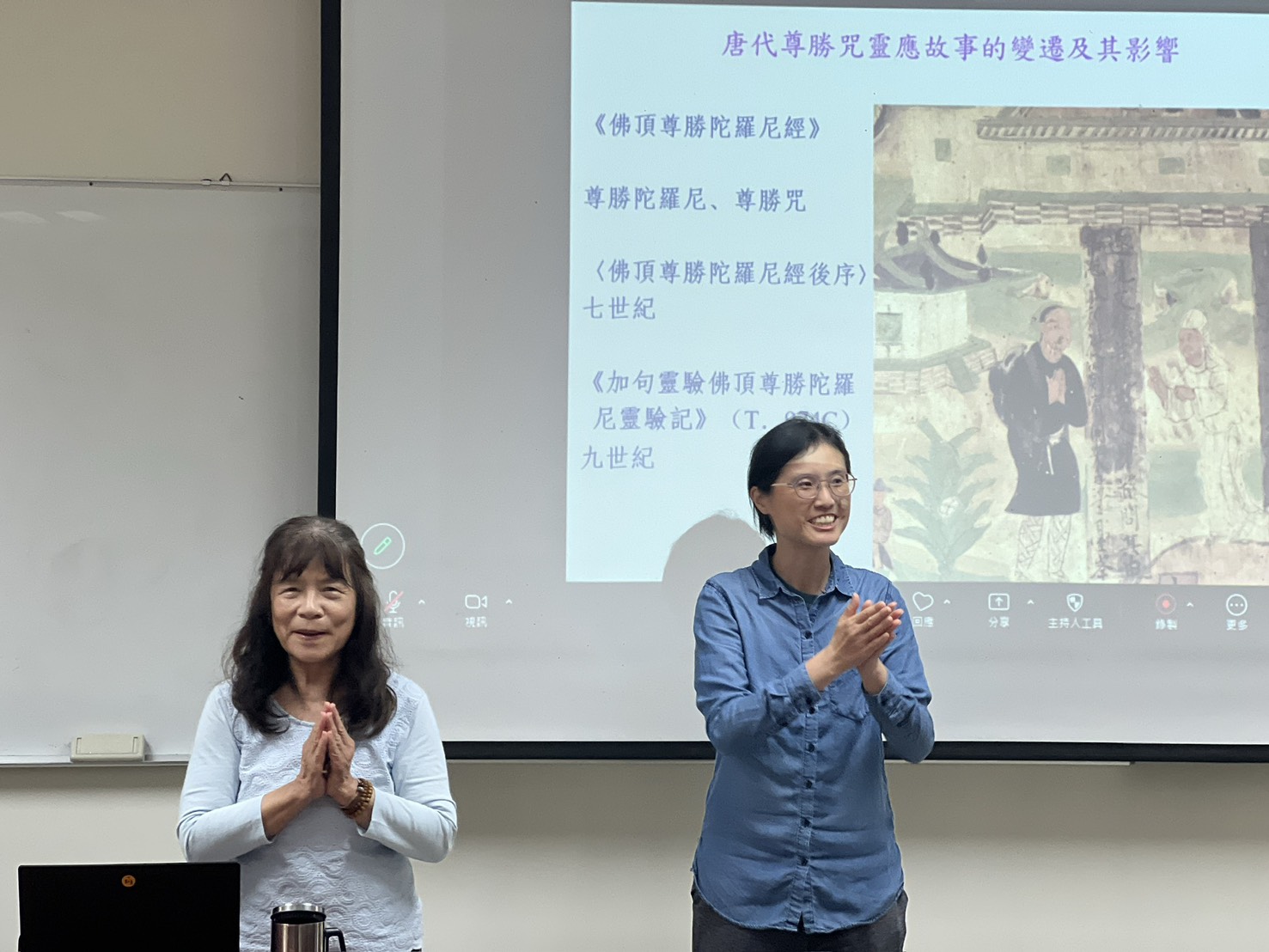
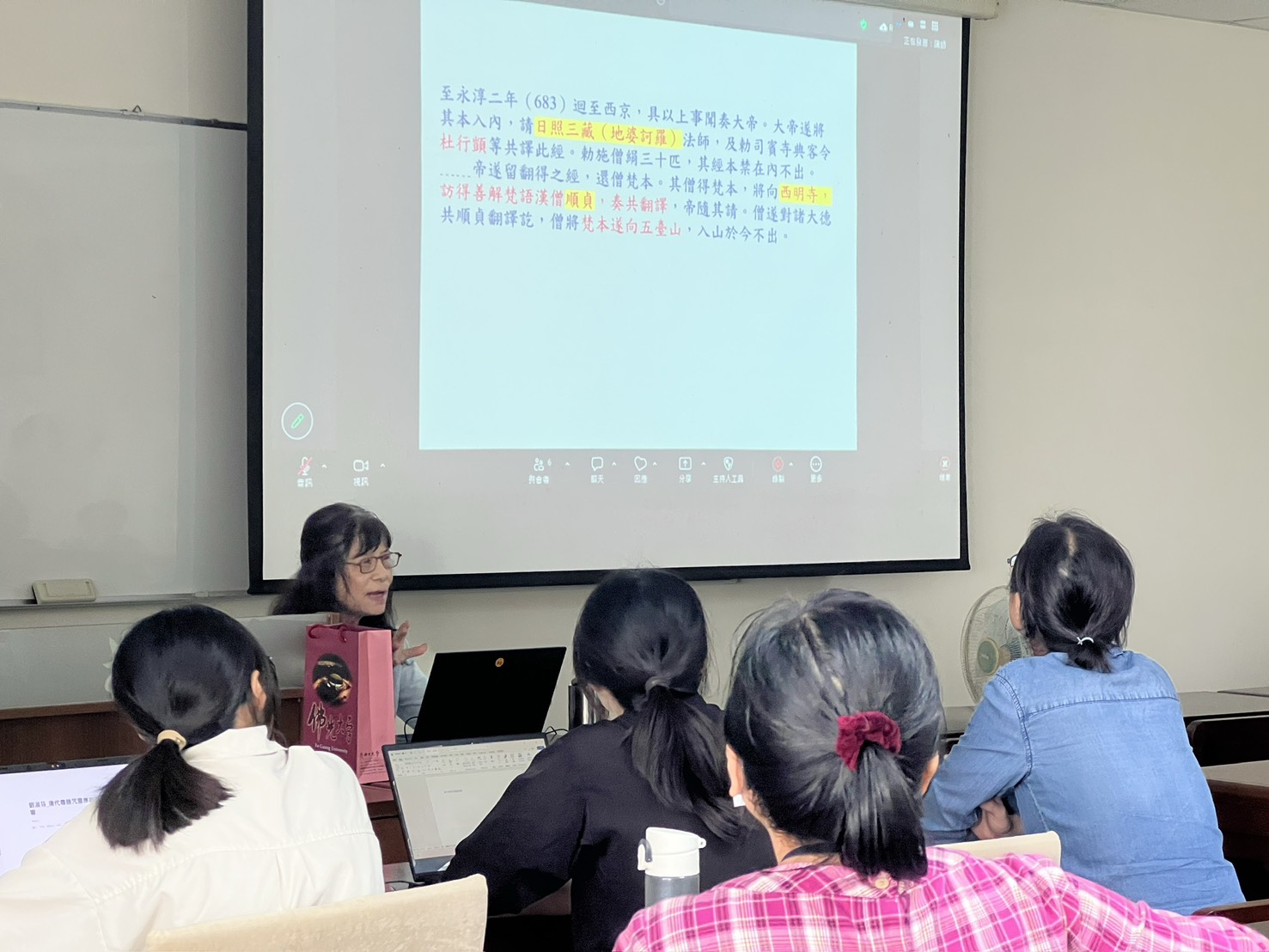
OrbitAs part of the Buddhist Teaching Workshop Series organized by the Buddhist Research Center at Fo Guang University, Professor Liu Shu-fen, Research Fellow at the Institute of History and Philology, Academia Sinica, was invited to deliver a lecture on April 29, 2026, entitled “The Transformation and Influence of Miraculous Narratives of the Uṣṇīṣa Vijaya Dhāraṇī in the Tang Dynasty.” Drawing upon the Buddhoṣṇīṣa Vijaya Dhāraṇī Sūtra and related miracle tales, the lecture examined the development, dissemination, and social influence of Uṣṇīṣa Vijaya Dhāraṇī belief from the Tang dynasty onward.
Professor Liu began by tracing the transmission and circulation of the Buddhoṣṇīṣa Vijaya Dhāraṇī Sūtra, noting that the scripture entered China during the seventh century and rapidly gained widespread popularity in the Tang period. The text emphasizes that reciting the Uṣṇīṣa Vijaya Dhāraṇī could eradicate negative karma, prolong life, and liberate beings from the sufferings of hell, making it one of the important religious practices of the time. Through sources such as the “Postface to the Buddhoṣṇīṣa Vijaya Dhāraṇī Sūtra” and the Record of Miraculous Responses to the Extended Uṣṇīṣa Vijaya Dhāraṇī, Professor Liu demonstrated how miraculous narratives gradually accumulated and evolved from individual religious experiences into widely influential religious legends. Stories such as Zhang Chengfu’s escape from bandits through dhāraṇī recitation, his return to life after death, and accounts of deceased individuals ascending to heaven or escaping hell through chanting the dhāraṇī illustrated the formation and transformation of these miracle tales.
From the perspective of material culture, Professor Liu also discussed in detail the emergence and development of the jingchuang (sutra pillars), a new form of Buddhist stone inscription that appeared during the Tang dynasty. These pillars frequently featured inscriptions of the Buddhoṣṇīṣa Vijaya Dhāraṇī Sūtra and were commonly erected near temples, transportation routes, and burial sites. Their function extended beyond scriptural propagation; through concepts such as “the shadow of the pillar reflecting upon the body and the dust touched by its shadow,” the pillars were believed to possess religious efficacy capable of removing sins and generating merit for those who came into contact with them.
Furthermore, Professor Liu emphasized the close relationship between Uṣṇīṣa Vijaya Dhāraṇī belief and the growing popularity of hell-related cosmologies. From the Tang dynasty onward, concepts of karmic retribution and judgment in the underworld became deeply embedded in popular consciousness. Miracle narratives frequently featured motifs such as “returning to life after death” and “judgment in the netherworld,” which further reinforced faith in dhāraṇī recitation and merit-making practices. Such beliefs were also closely intertwined with filial piety, as devotees sought to dedicate merit to deceased relatives through the construction of funerary sutra pillars and the recitation of dhāraṇīs, thereby facilitating the salvation of the dead and repaying parental kindness.
Finally, Professor Liu discussed the transmission of the different translations of the Uṣṇīṣa Vijaya Dhāraṇī, including versions translated by Buddhapāli, Divākara, Yijing, Śubhakarasiṃha, and Amoghavajra. In total, seven translations are extant, reflecting the dynamic process of textual expansion and transformation that occurred during the transmission of Buddhist scriptures.
Through an integrated analysis of canonical texts, miracle narratives, and material culture, Professor Liu explored the multiple functions and far-reaching influence of Uṣṇīṣa Vijaya Dhāraṇī belief in Tang society. The lecture was rich in historical detail and provided participants with substantial scholarly insights.