 Orbit Logo" />
 Orbit
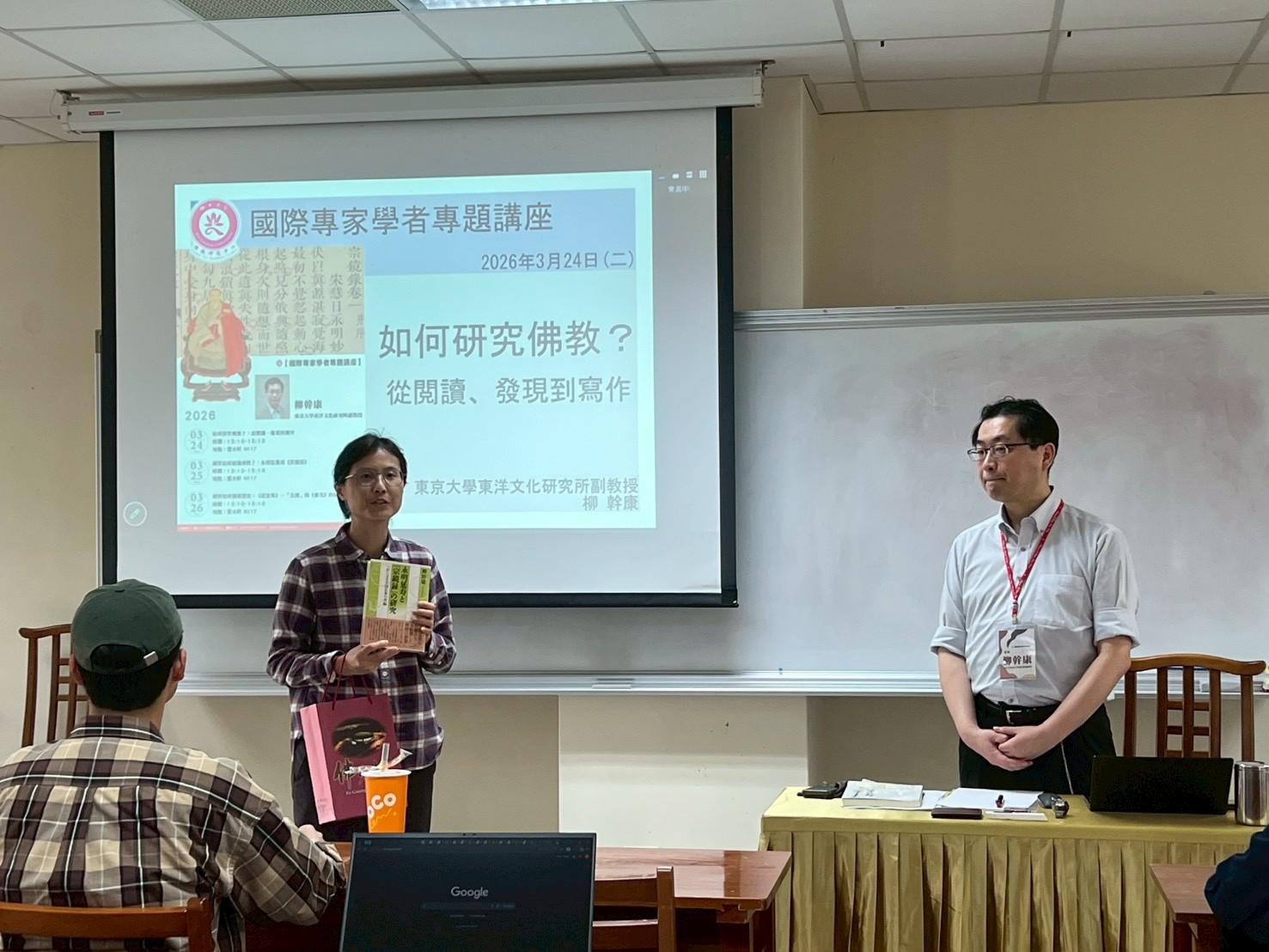
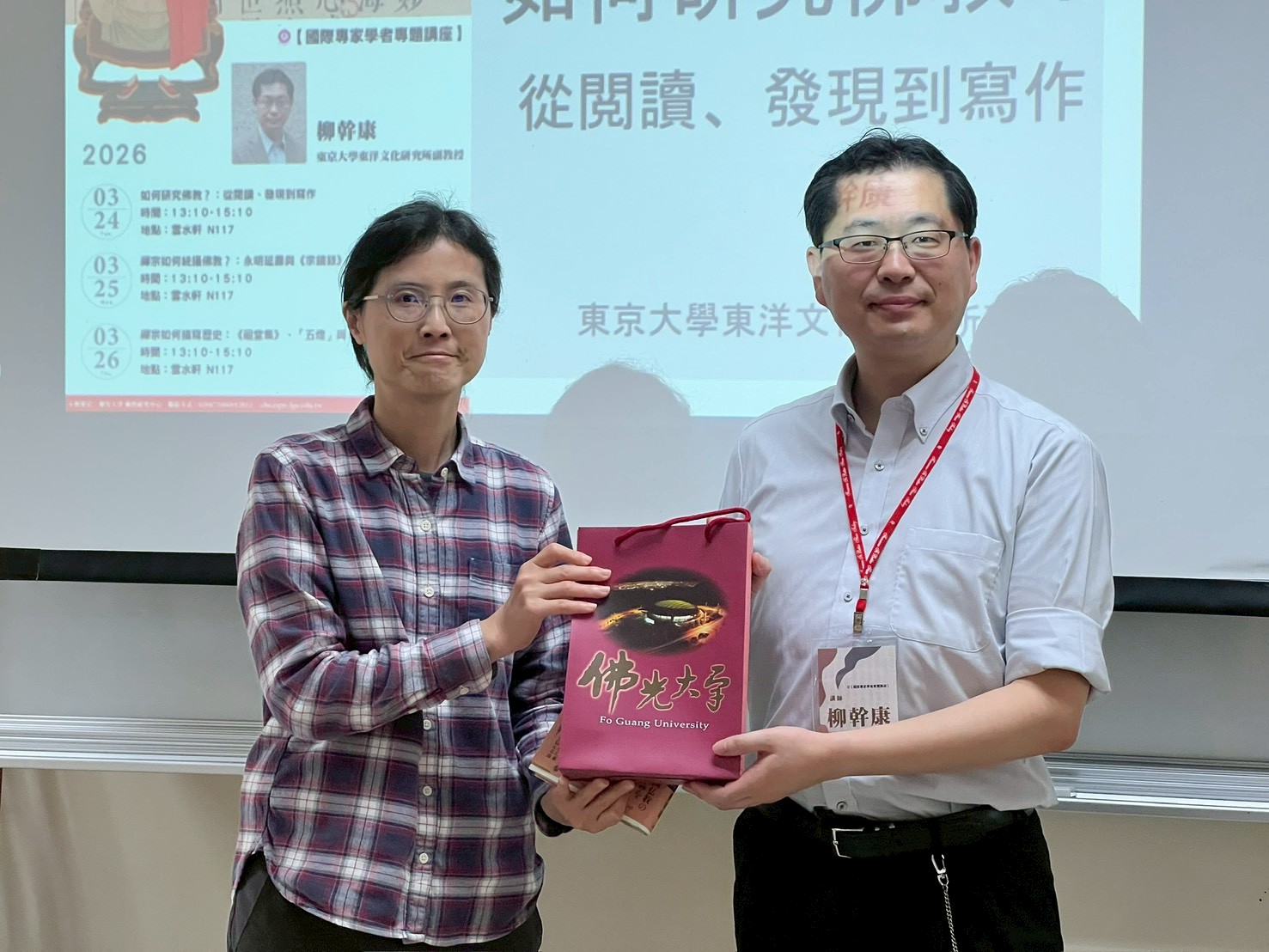
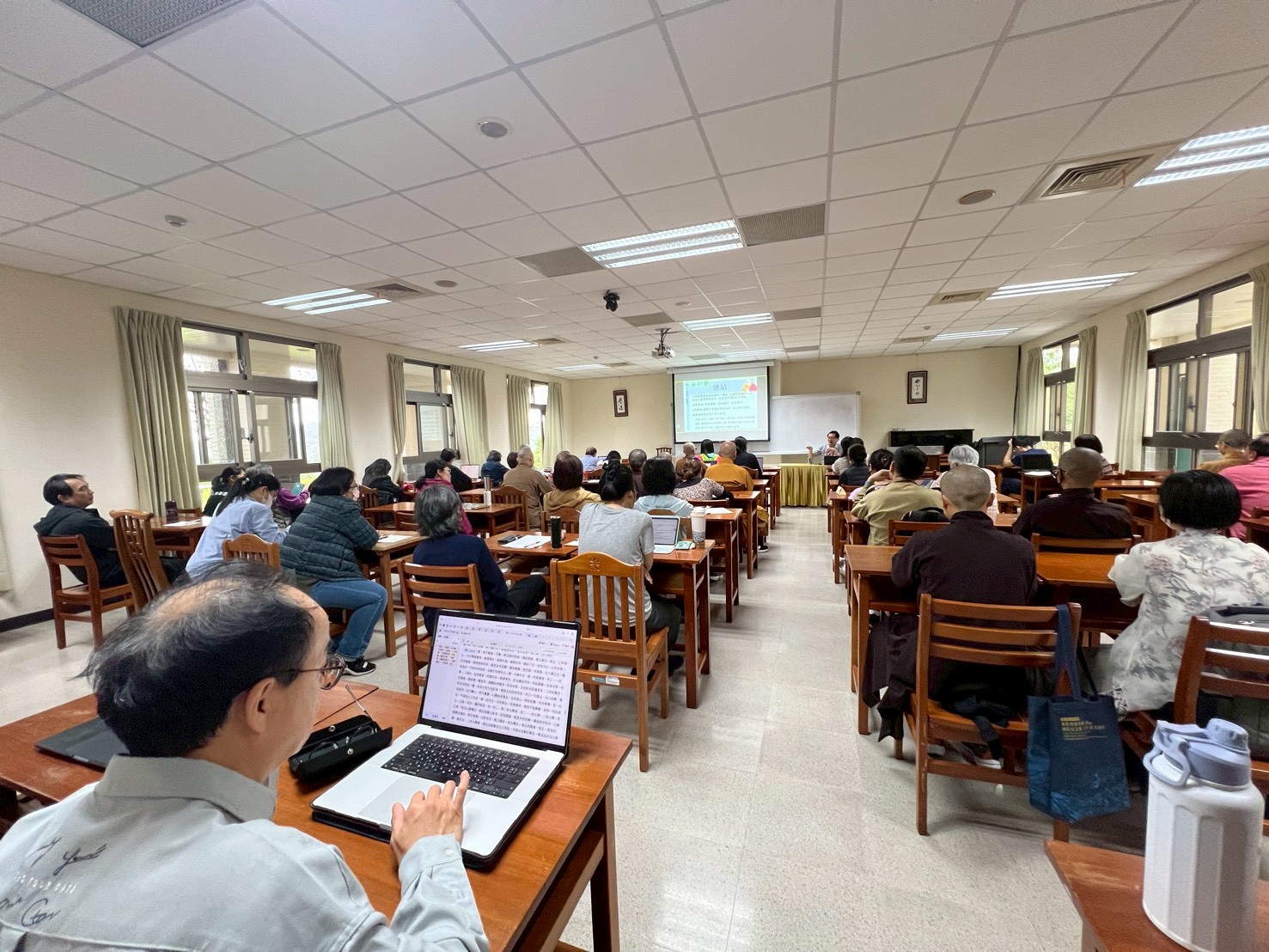
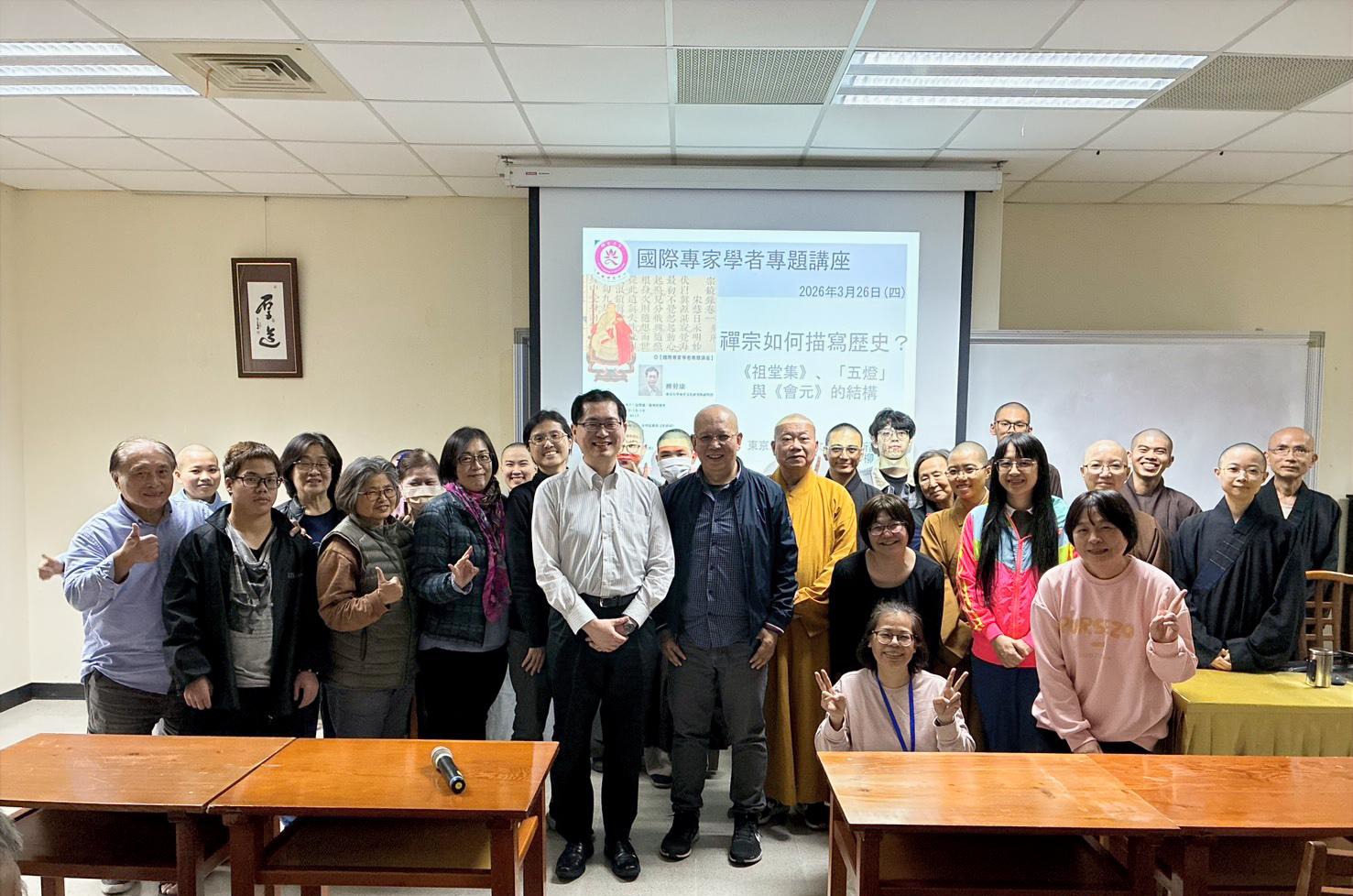
OrbitThe Center for Buddhist Studies at Fo Guang University hosted an “International Distinguished Scholars Lecture Series” from March 24 to 26, 2026. Associate Professor Yanagi Mikiyasu from the Institute for Advanced Studies on Asia, the University of Tokyo, was invited to deliver a three-day lecture series. His talks covered Buddhist research methodology, the integration of Chan (Zen) thought, and the writing of Chan history. Beginning from methodological concerns, the lectures progressively advanced to intellectual history and historiography, offering faculty and students a comprehensive and in-depth academic dialogue.
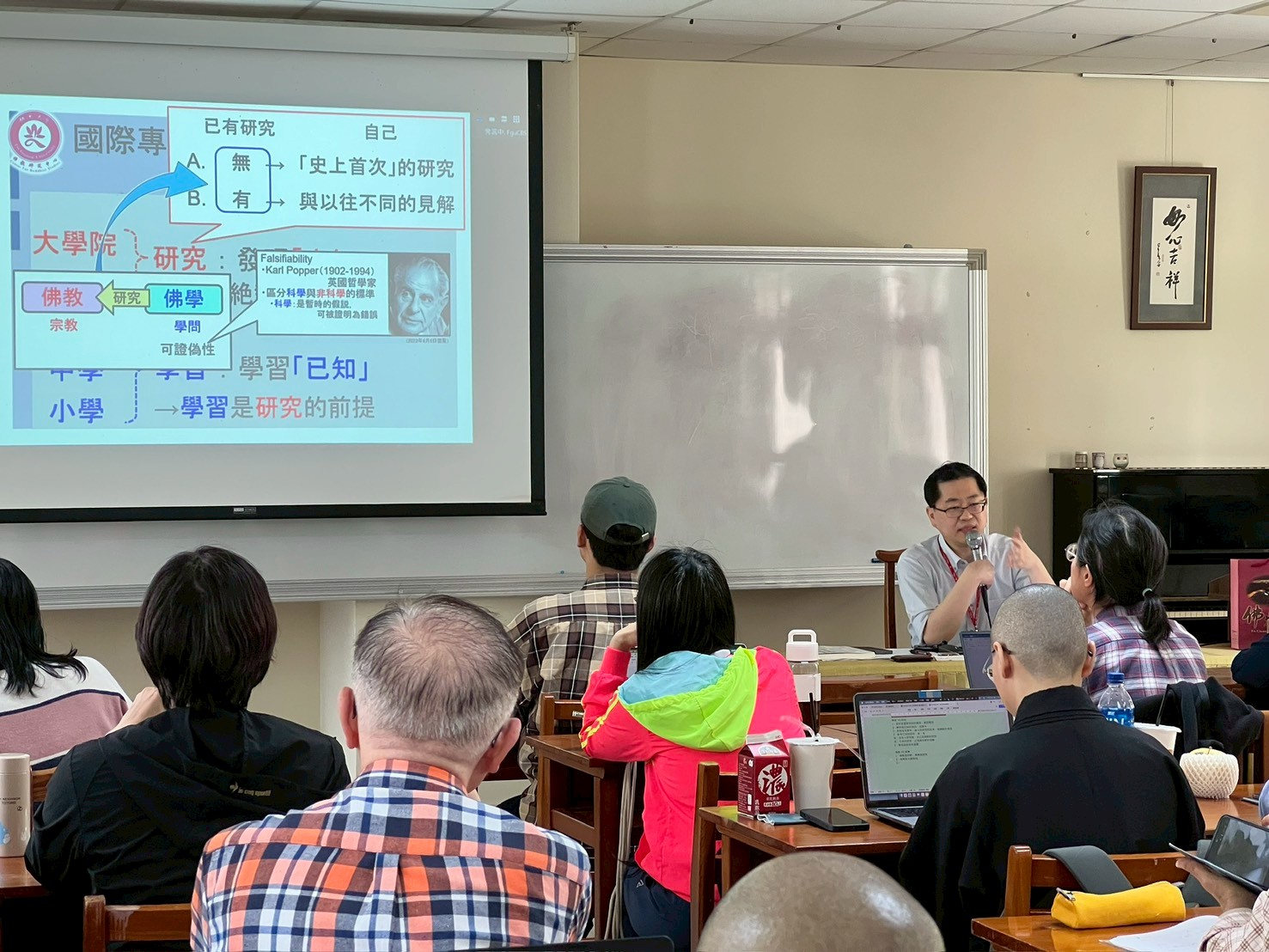
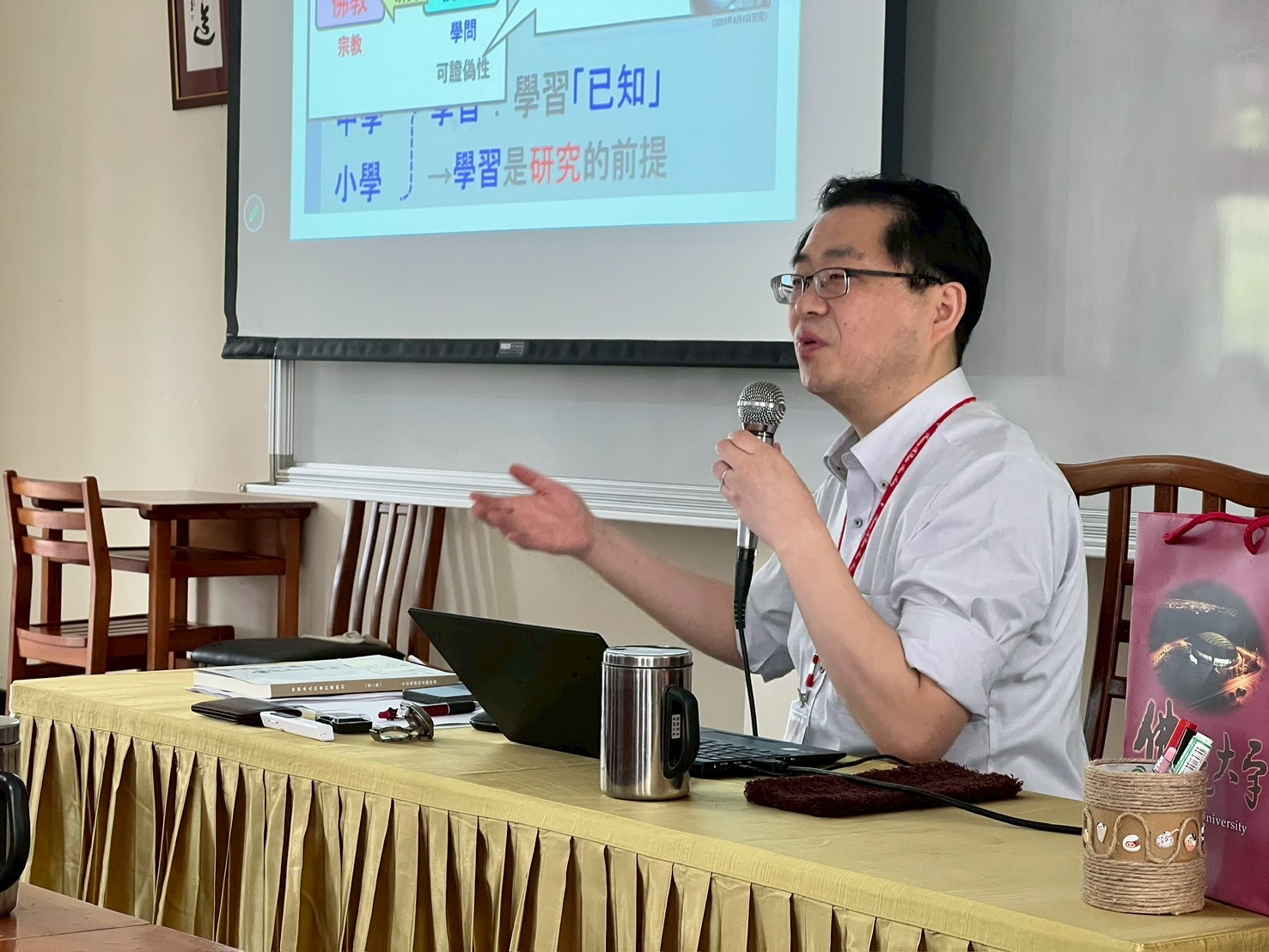
The first lecture, “How to Study Buddhism? From Reading and Discovery to Writing,” focused on the foundational methods of Buddhist studies. Professor Yanagi emphasized that the core of Buddhist research lies in repeated engagement with both primary sources and existing scholarship. Through an “alternating dialogue between texts and research,” scholars can establish a solid academic foundation. He stressed that academic writing is not an expression of personal feelings, but must be grounded in verifiable evidence and a clear research question. A strong academic paper, he noted, should follow a “one question, one answer” structure, with clearly defined findings serving as the starting point of argumentation. This lecture provided essential guidance for rigorous scholarly training.
The second lecture, “How Does Chan Integrate Buddhism? Yongming Yanshou and the Zongjing lu,” turned to intellectual history, examining how the Chan monk Yongming Yanshou of the Five Dynasties and Ten Kingdoms period responded to internal divisions within Buddhism. Against the backdrop of the “Tang–Song transformation,” Buddhism had become fragmented into doctrinal (jiao), meditative (chan), and disciplinary (lü) traditions. Through the Zongjing lu, Yanshou proposed an integrative framework centered on the concept of “One Mind,” advocating the unification of scriptural understanding, meditative practice, and moral discipline. This model aimed to construct a comprehensive Buddhist system encompassing “learning doctrine, contemplating the mind, and upholding precepts.” His thought not only addressed sectarian divisions of his time but also had a lasting influence on later East Asian developments such as the integration of Chan and doctrine, and the synthesis of Chan and Pure Land traditions.
The third lecture, “How Does Chan Write History? The Structure of the Zutang ji, the ‘Five Lamps,’ and the Huiyuan,” shifted the focus to historiography, exploring how Chan history is constructed. Professor Yanagi pointed out that history is not a simple reflection of facts, but rather the result of selection, arrangement, and interpretation within historical texts. By analyzing the Zutang ji, the Song dynasty “Five Lamps” texts, and the development leading to the Wudeng huiyuan, he demonstrated how Chan historiography constructs lineage systems through the organization of “transmission” and hierarchical positioning. These structures gradually established the narrative framework of the “Five Houses and Seven Schools.” He also reminded the audience to be attentive to biases in textual preservation, noting that monks who were recorded and transmitted in history were often closely tied to institutional authority and lineage, reflecting the underlying structures of selection and power in historical writing.
Beginning with the question of how to study Buddhism, moving to how Buddhist thought is integrated, and culminating in how Buddhist history is written, Professor Yanagi’s three lectures collectively outlined a clear and coherent academic trajectory. The Center for Buddhist Studies noted that this lecture series not only deepened students’ understanding of Buddhist studies, but also highlighted important contemporary international approaches and trends in the study of Buddhist texts, thought, and history, offering key inspiration and direction for future research.